
The first hard freeze of the season settles the argument fast. You come in from evening chores, the house is at 58 degrees, and the furnace is either straining or silent. A stove gives you heat you can stand next to, and in the country it offers something a furnace never can: warmth that keeps coming when the grid doesn't. Choosing between wood and pellets is mostly a question of how much of the work you want to do yourself.
How Each Stove Actually Burns
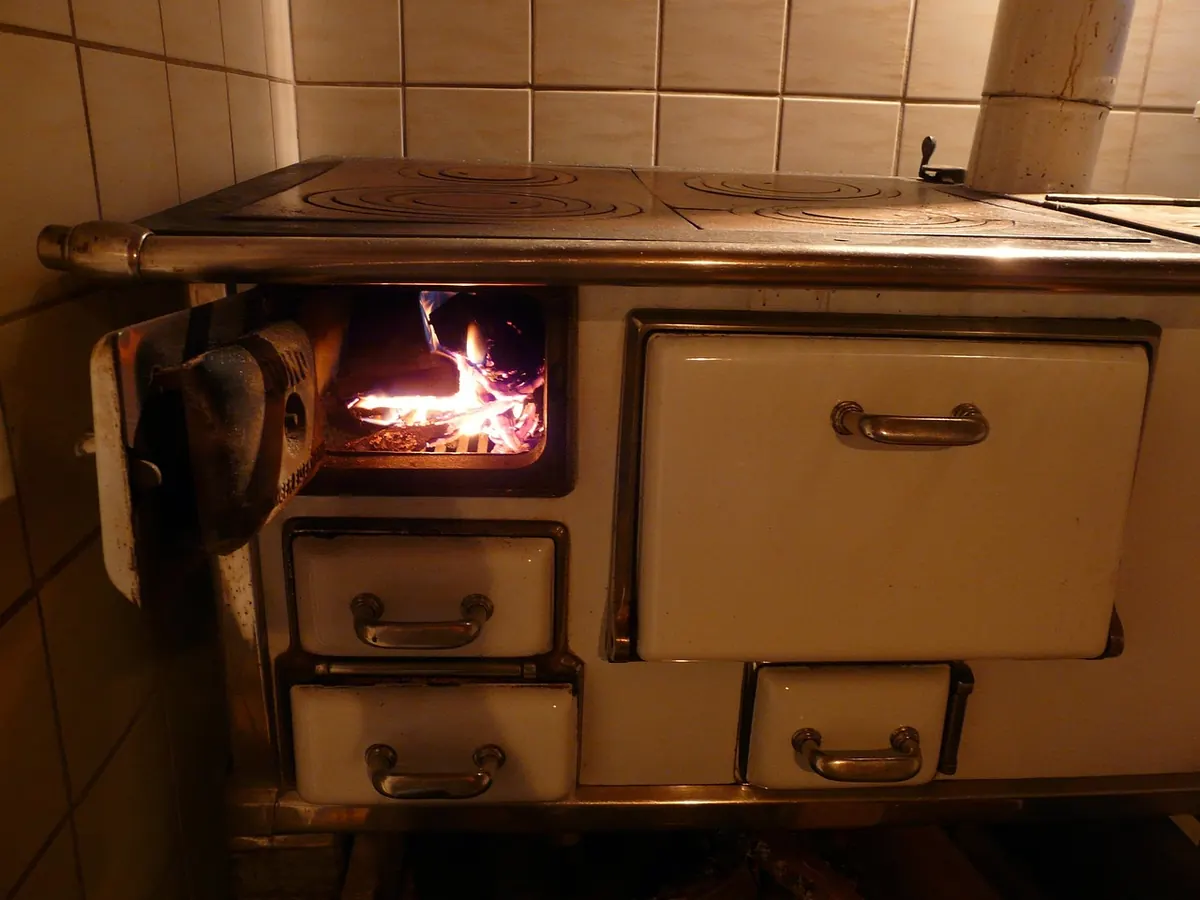
A wood stove is a simple machine. You load split cordwood into a firebox, light it, and manage the burn with an air lever. Heat comes off the stove body and the pipe, part of it radiant (you feel it on your face from across the room) and part convective as air drifts past hot steel or cast iron. Once it's running well, it needs no fan, no motor, and no outlet.
A pellet stove is a small automated furnace in a stove-shaped box. A hopper holds compressed wood pellets, and an auger feeds them into a burn pot at a steady rate. One fan pushes combustion air through the fire, another moves heated air into the room. You set a dial or a thermostat, and it holds that temperature without you.
Fuel: What You're Buying, Storing, and Hauling
If you have a woodlot, your firewood costs sweat, chainsaw time, and patience. Split it, stack it, cover the top, and leave the sides open to the wind. Aim for at least a full year of seasoning and burn wood at roughly 15 to 20 percent moisture. A cheap moisture meter takes the guesswork out of it. Green wood sends its heat up the chimney and leaves creosote behind in the flue, which is how chimney fires start.
Pellets arrive in 40-pound bags on a pallet, and they have to stay bone dry. A bag that gets wet turns back into sawdust. Quality varies more than most people expect, so buy a few bags from a supplier before committing to a ton, and pay attention to how much ash is left behind.
A few things worth sorting out before you commit:
- How much wood can you store under cover, and how far is that stack from the stove door?
- Is there a reliable pellet supplier within a reasonable drive, or will you be hauling every bag yourself?
- Who splits your wood: you, a neighbor with a hydraulic splitter, or a dealer selling it seasoned?
- Can you lift a 40-pound bag onto a pallet and into a hopper every day or two?
- Is this stove your main heat source or a backup for cold snaps?
Money: Upfront Costs and the Long Run
The stove itself is only part of the bill. Budget for the hearth pad, the chimney or vent, clearances from walls and ceilings, and often a permit and inspection. Pellet stoves generally cost more upfront than a comparable wood stove because of the motors, auger, and controls, though they can sometimes vent straight out through a wall, which saves on chimney work. A wood stove in an existing fireplace usually needs a stainless liner, and a freestanding one needs a proper insulated chimney that clears the roofline.
Prices swing widely by region, size, and style, so get two or three quotes from local installers instead of trusting a number you read online. On the running side, wood is cheap if you cut and split it yourself and expensive if you buy it by the cord. Pellets are a purchased fuel with a predictable burn rate. One detail people forget: a pellet stove pulls electricity all winter for its fans and auger, so it adds to the power bill, while a wood stove adds nothing.
Heat, Comfort, and the Power Outage Test
A wood stove throws strong, dry heat and gives you a room that feels genuinely warm on a January night. It also cycles. The stove runs hot right after a load, then settles into coals, and the far bedrooms stay cooler unless you move air with a small fan. Pellet stoves hold a steady temperature and are happy to run while you sleep, but they are not silent. You will hear the auger turning and the blowers running, and that hum becomes part of the house.
When the lines come down
This is the rural test that matters. A pellet stove stops the moment the power does, and it stops safely, but it stops. A battery backup or a generator sized for the auger and fans can keep it going, and plenty of owners set that up. A wood stove simply doesn't care. No power, no problem: you load it, you light it, you stay warm.
Maintenance and the Daily Rhythm
With wood, you'll shovel ash every few days during heavy use, sweep the chimney at least once a year, check door gaskets and firebrick, and burn hot fires to keep the flue clean. With pellets, you scrape the burn pot, empty a heavier ash pan, wipe down the glass, and clean the heat exchanger most weeks. Once a year, clean the exhaust vent thoroughly and run the hopper empty at the end of the season. Motors, augers, and control boards eventually wear out and need replacing.
The real difference is rhythm. Wood asks something of you every few hours. Pellets ask for fifteen minutes on a Saturday and a bag or two a day.
Which Fits Your Place?
- You have wood access, a place to season it, and you like tending a fire: choose wood.
- You want even heat, a thermostat, and minimal handling: choose pellets.
- Your power goes out often and you have no generator: wood is the safer bet.
- Nobody is home during the day in winter: pellets win on convenience.
- You want both: a wood stove in the main room and a pellet stove in a wing is a common country arrangement, though it doubles the venting and maintenance.
Before You Cut the Hearth
Measure clearances carefully, check your local building codes, and call your insurance agent before you buy anything. Many policies have specific requirements for solid-fuel appliances, and it's much easier to satisfy them during installation than after. Install a carbon monoxide detector nearby, have a professional handle the venting if you're at all unsure, and keep a dry place for fuel that isn't stacked against the house. Either stove will heat a country home well. Pick the one whose chores you're willing to do for the next twenty winters, because that's the part that decides whether you love it or resent it.
Photo: Hans / Pixabay