
Blackberry season arrives quietly. One week the canes along the fence line hang with hard red fruit that tastes like nothing, and the next they are heavy with soft black berries that stain your fingers before you get the bucket home. Late summer is the best window of the year for a beginning forager, and blackberries are the most forgiving fruit to start with: abundant, easy to spot, and hard to mistake once you know what you are looking at. Here is what I would tell a friend heading out for the first time.
When Blackberries Are Ready
Peak picking runs from roughly mid-July through September, depending on where you live and how the summer has gone. A shaded north-facing bank will ripen a week or two behind a sunny south-facing one, and a single patch usually produces for three to four weeks. Walk the same hedgerow every few days rather than stripping it once.
Ripe berries are dull black and give slightly when you roll one between your fingers. They come off the cane with a light tug, and the fruit that falls into your hand almost by itself is the sweetest. If you have to pull hard, leave it. Shiny jet-black berries are usually still tart; dull is what you want. Red berries will not ripen after picking, so there is no point taking them home, though they are useful in jelly because underripe fruit carries more natural pectin.
Pick mid-morning, after the dew has dried, or in the early evening. Berries picked in the heat of the afternoon are soft and will bruise on the walk back.
Telling Blackberries From Their Relatives
The whole family carries aggregate fruit — dozens of tiny beads packed into one berry. Once you see that structure, most confusion disappears.
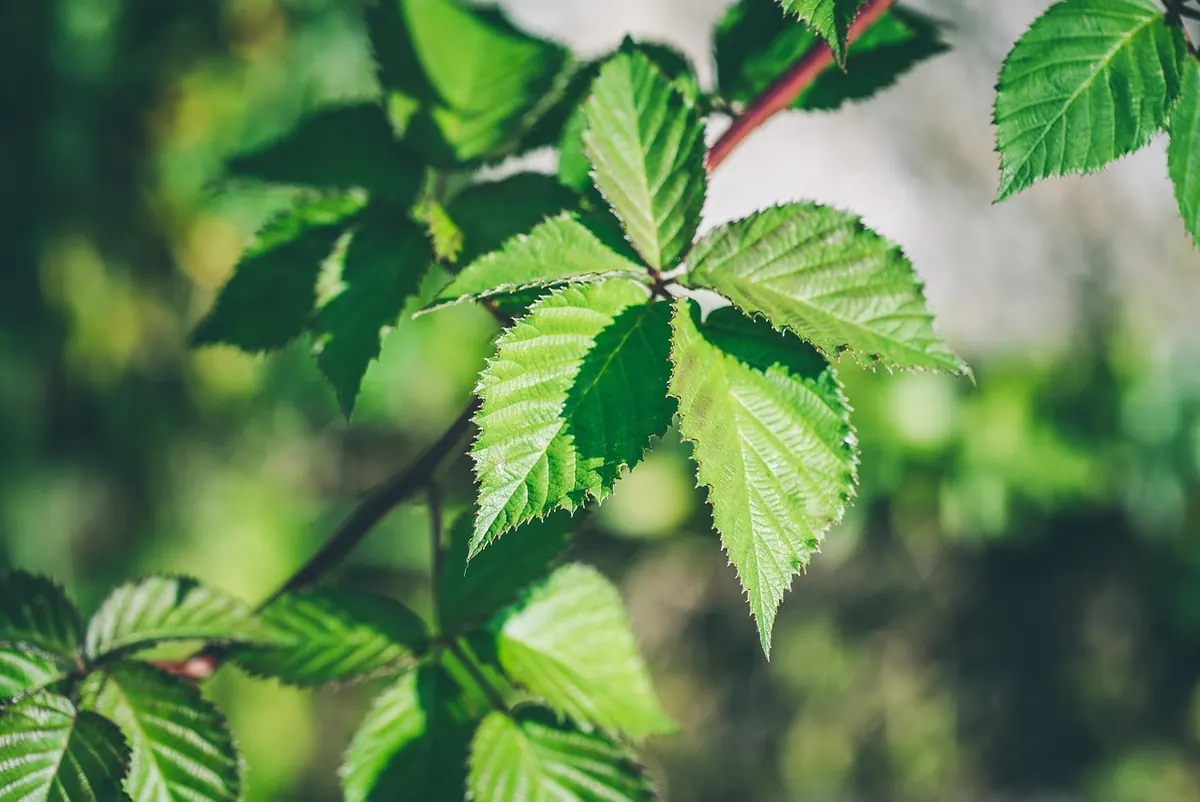
- Blackberry: the berry comes away with a pale core inside it, leaving a flat, greenish socket on the plant. Canes are stiff and arching, armed with sturdy prickles. Leaves usually show three to five leaflets fanning from one point.
- Black raspberry: the fruit slips off clean, leaving a white cone standing on the cane, so the picked berry is hollow like a thimble. Canes are thinner, often coated in a blue-white powdery bloom, with finer thorns. Leaves are typically in threes with pale undersides.
- Dewberry: trails along the ground rather than arching, ripens earlier, and carries smaller fruit with fewer beads.
Plants worth ruling out look nothing alike once you check the fruit structure. Pokeweed, Virginia creeper, buckthorn and the nightshades all produce single berries in loose clusters, never a cluster of beads. If you are ever unsure, do not eat it. Confirm the plant with someone local who knows it, or with your regional extension service, before it goes in a bucket.
Where to Pick, and Where to Walk Past
Blackberries love disturbance. Look along field edges, hedgerows, fence lines, old pastures, ditch banks, clearcuts and the weedy ground around abandoned homesteads. Fruit grows on second-year canes, so a patch is usually a mix of this year's green growth and last year's woody, darker canes.
Skip the roadside shoulder within spraying reach of fast traffic, railway and utility corridors, the edges of crop fields, industrial lots, and low-hanging fruit along popular dog-walking paths. On private land, ask first. Rural etiquette is simple: ask, close every gate behind you, park where you are not blocking a field entrance, and leave the ground as you found it.
Gear, Technique, and the Things That Bite
- Long sleeves, thick trousers, boots or sturdy closed shoes, and gloves with some substance — thorns go straight through thin cotton.
- A shallow container rather than a deep one, so the bottom berries are not crushed. A cut-down plastic jug with a strap through the handle, hung at your belt, keeps both hands free.
- Pruning snips, for the one cane standing between you and the best fruit, and a stick to part the tangle before you commit your arms to it.
- Insect repellent, water, and a bandana. Ticks live in this habitat in late summer.
Reach in from the outside first, then work your way down into the patch. Lift canes and look underneath: the fruit everyone misses hangs below the leaves, in shadow. Pick with the pads of your fingers at the base of the berry, roll gently, and let it drop into the bucket. Tap the container now and then to shake loose beetles.
Poison ivy and poison oak often grow right up through bramble patches, so learn the three-leafed habit and the hairy climbing vine before you start. If you brush against it, wash promptly with soap and cool water, and see a doctor if a reaction develops. Yellowjackets get bold around ripe fruit late in the season, and snakes may rest at the base of a dense hedge, so step firmly and look before reaching low. Blackberry tangles also hide holes, rocks and drop-offs; watch your footing more than you watch the berries.
Cleaning and Storing the Haul
Sort on a tray as soon as you get home. Pick out leaves, stems and any moldy berries, which spread quickly. A short soak in cool water loosens grit and the odd stray insect; drain well and spread the berries on a towel to dry. Store them in a shallow container lined with a cloth in the refrigerator and use them within two or three days.
To freeze, spread the berries in a single layer on a sheet pan, freeze them solid, then tip them into a bag. They will keep for months and thaw soft enough for pies, jam and cobblers. Wild fruit deserves care — wash it well, and if you are pregnant, immunocompromised, or have food allergies, check with a doctor before eating it raw. Cooking removes most of that concern, which is one more argument for pie.
Three Simple Things to Make
Quick blackberry jam
Combine four cups of berries, two cups of sugar and the juice of half a lemon in a heavy pot. Mash lightly, bring to a simmer, and cook for 25 to 30 minutes, stirring. Test by dropping a spoonful on a chilled plate; if it wrinkles when you push it, it is ready. Refrigerate and use within a few weeks, or freeze in small jars.
Skillet cobbler
Toss four cups of berries with half a cup of sugar, a tablespoon of lemon juice and a tablespoon of cornstarch, and spread them in a buttered skillet. Drop spoonfuls of biscuit dough over the top and bake at 375°F for about 40 minutes, until the filling bubbles at the edges. Let it sit 15 minutes before serving.
Blackberry shrub
Mash two cups of berries with one cup of sugar, cover, and leave at room temperature for a day, stirring once or twice. Strain out the solids, stir in a cup of cider vinegar, and refrigerate. A splash of the syrup in soda water makes a sharp, cooling drink on a hot afternoon.
Habits That Make Picking Worth It
Scout in June, before anything ripens, and note the patches worth returning to. Keep gloves, a stick and a shallow bucket in the car so a good hedgerow never catches you unprepared. Wear clothes you do not mind staining, because the juice does not come out. Pick a little more than you need and freeze the excess, since a winter cobbler is the real reward for a hot afternoon in the brambles. Leave some fruit on the canes for the birds, and do not trample the new green growth — those canes carry next year's crop.
The season is short and the window in any single patch is shorter. Go this week.
Photo: Pezibear / Pixabay